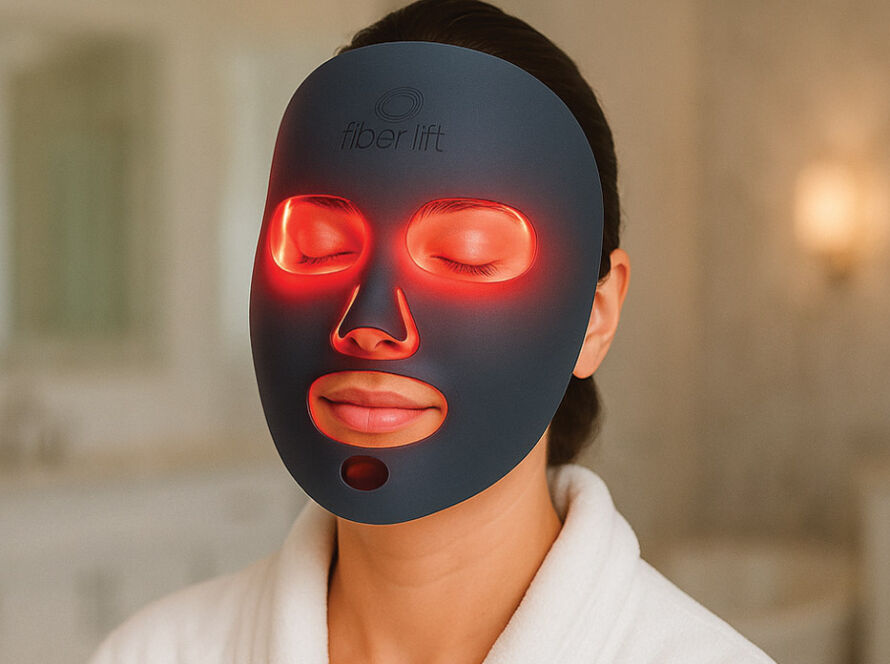
Introduction: Clinic-Level Skincare, Now at Home
Not too long ago, LED light therapy was something you could only get at a dermatologist’s clinic or a facialist’s salon. Today, that has changed.
Thanks to LED face masks, you can now enjoy professional-quality light therapy at home. It is no longer limited to skin clinics and spas. You can use advanced skin treatment whenever you want.
But what exactly does LED light therapy do? Why does light fix acne, aging, pigmentation, and skin texture issues? And a question that haunts us all: How can an at-home LED face mask deliver real results? And how can it do so without harming our skin?
This guide explains how light therapy works for skin. It also covers the science behind LED face masks. You’ll learn how each light wavelength interacts with your skin.
Moreover, you’ll know what makes a mask effective. How to use light therapy safely at home, and how to get results that last.
What Is LED Light Therapy?
LED light therapy uses non-UV light of a specific wavelength to stimulate certain biological processes in the skin. Unlike lasers or the harshness of other chemical treatments, LED therapy is non-destructive to the skin. Instead, it operates by sending light energy that skin cells can absorb and use.
Your skin contains photoreceptor proteins in cells that respond to light. When receptors absorb specific wavelengths, different body responses occur. These include energy production, cell repair, and reduced inflammation.
This would explain why LED therapy can target multiple concerns simultaneously. It doesn’t cover up problems. It enhances the skin’s function at the cellular level.
How LED Light therapy Works at Home
At-home LED face masks are made of arrays of light-emitting diodes that you can apply to your skin. When applied, the LEDs emit targeted wavelengths directly onto the skin with uniform coverage.
LED light also penetrates the dermis and epidermis more deeply than creams and cleansers, which only sit on the skin’s surface. The depth varies with the wavelength used. Shorter wavelengths treat surface issues, such as acne. Longer wavelengths reach deeper to boost collagen and tissue repair.
High-end masks like the FiberLift LED Light Mask incorporate precision light-delivery mechanisms, e.g., honeycomb-matrix-based patterns, to prevent uneven exposure. This guarantees equal and consistent therapeutic energy across all areas of the face, free of hot spots and gaps.
The Science Behind Light and Skin Cells
When LED light reaches skin cells, it interacts with mitochondria, the cell’s energy centers. Specific wavelengths increase ATP (adenosine triphosphate) production, which fuels cellular repair and regeneration.
As ATP levels rise, skin cells perform better. Collagen production increases. Inflammation decreases. Blood circulation improves. Damaged cells repair faster.
This is why LED therapy improves skin quality over time rather than delivering a temporary cosmetic effect.
Understanding LED Light Colors and Their Functions
Different wavelengths create different biological responses. A quality LED face mask offers multiple modes so treatments can adapt to your skin’s changing needs.
Red Light face mask: Anti-Aging and Skin Renewal
Red light face masks penetrates the dermis, where collagen and elastin are produced. It stimulates fibroblasts, improves circulation, and reduces inflammation.
With consistent use, red light helps soften fine lines, improve firmness, and restore skin elasticity. It also accelerates healing, making it ideal for post-procedure recovery.
Blue Light face masks: Acne Control and Clarifying Care
Blue light face masks targets acne-causing bacteria on the skin’s surface. It disrupts bacterial metabolism, reducing breakouts without drying or irritating the skin.
Unlike harsh acne treatments, blue light does not compromise the skin barrier. This makes it suitable for teens and adults with sensitive or reactive skin.
Infrared Light: Deep Repair and Restoration
Infrared light reaches the deepest layers of the skin. It supports tissue regeneration, improves oxygenation, and enhances cellular repair.
This wavelength is particularly effective for skin aging, inflammation, compromised barriers, and long-term skin resilience.
Why LED Face Masks Are Safer Than Many Treatments
One of the biggest advantages of LED therapy is safety. Face-lifting mask devices do not emit UV radiation, do not cause thermal injury, and do not damage the skin barrier.
High-quality devices include built-in eye protection, energy gating, and automatic shut-off timers. These features prevent overexposure and make LED therapy suitable for frequent use.
What Makes an LED Face Mask Truly Effective?
Not all LED masks deliver the same results. Effectiveness depends on more than just the number of lights.
A professional-grade mask focuses on:
- Uniform light distribution
- Medical-grade wavelengths
- Flexible, skin-conforming materials
- Controlled energy output
- Long-term comfort to encourage consistent use
Devices like FiberLift combine engineering precision with user comfort, making daily treatments realistic rather than burdensome.
How to Use an LED Face Mask at Home
Using an LED face mask is simple, but consistency matters more than intensity.
Start with clean, dry skin. Wear the mask for 15–20 minutes per session, three to five times per week. Use the light mode that matches your primary concern, or rotate modes if your device allows multi-spectrum therapy.
After treatment, apply serums or moisturizers. LED therapy enhances absorption, allowing active ingredients to work more effectively.
Results You Can Expect Over Time
LED therapy works gradually. Most users notice improved brightness and reduced inflammation within the first week. Acne reduction often appears within two weeks. Collagen-related improvements, such as firmness and fine line reduction, typically become visible after four to six weeks.
The key is consistency. LED therapy compounds over time, improving baseline skin health rather than offering a short-lived glow.
Frequently Asked Questions (FAQs)
Yes. The lights in high-quality LED masks are non-UV and have controlled energy output. This means they are safe for daily skin use if you follow directions.
No, but they enhance them. LED Therapy increases cellular function, which, in turn, allows serums and creams to work more effectively.
Some benefits show up in days. Others involve deeper processes, like collagen production. These require continuous use for weeks to see results.
Yes. LED treatment works for most skin types and many conditions, including sensitive or acne-prone skin.